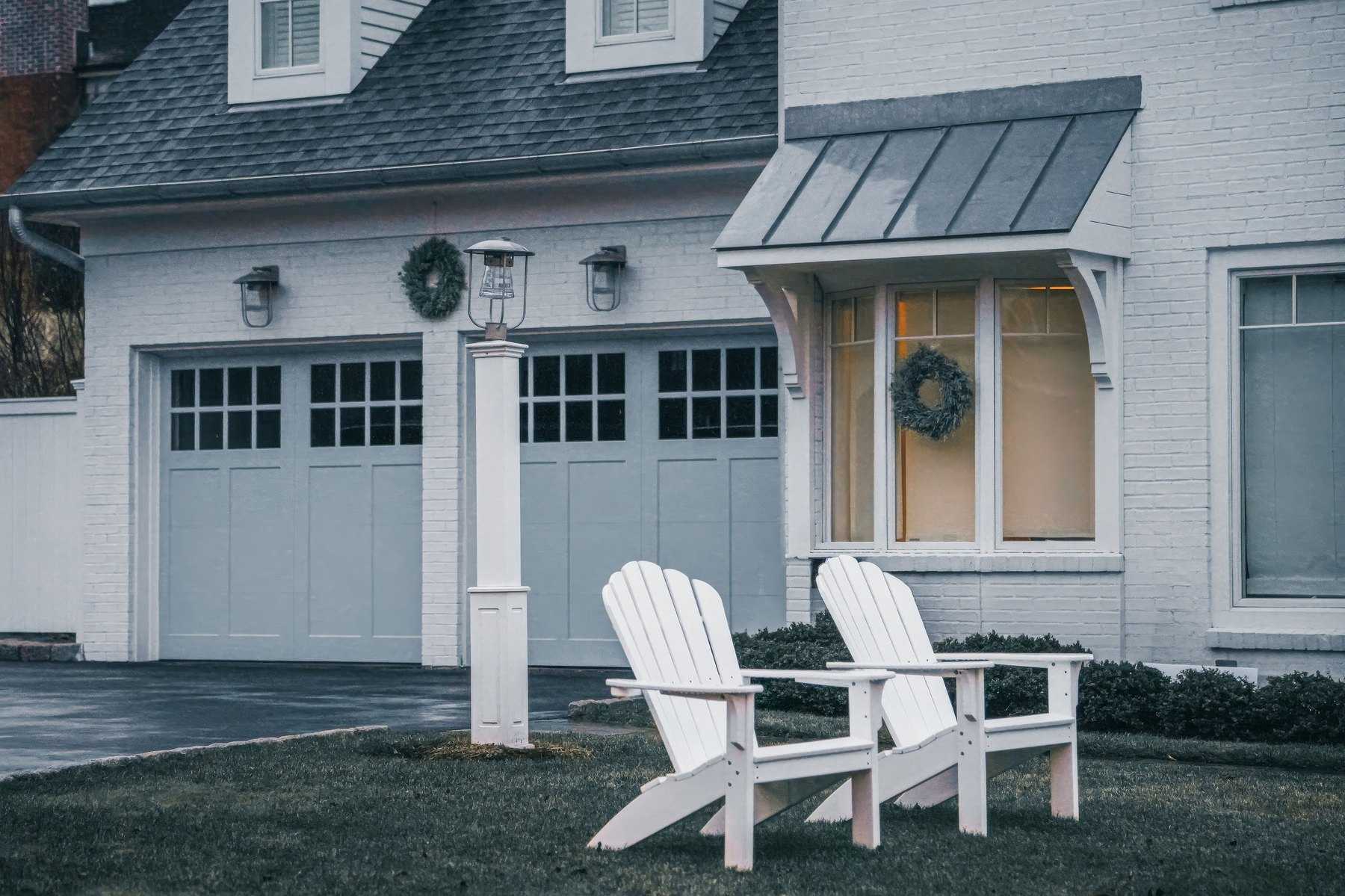
Is it time to replace?
A broken spring, cable or opener is a repair, not a reason to replace a sound door. Replacement starts to make sense when:
- sections are dented, cracked, warped or rusted through, or the door was hit by a vehicle;
- parts for the door are no longer available;
- the door is uninsulated and you’d like a cooler, quieter garage;
- you’re updating the look of the house, or the door no longer matches your HOA’s standards; or
- repairs keep stacking up on an old door.
If you’re unsure, our repair guide covers the common single-part failures.
Sizes and measuring
Clopay lists 8×7 and 9×7 feet as the most common single-car door sizes and 16×7 feet as the classic double, with 8-foot-tall doors increasingly common and doubles up to 18 feet wide. If your home has more than one garage door, each opening is measured separately. Your installer should measure the rough opening, the headroom above it and the side room on each side before quoting, because those dimensions decide which track and spring setup will fit.
Styles and materials
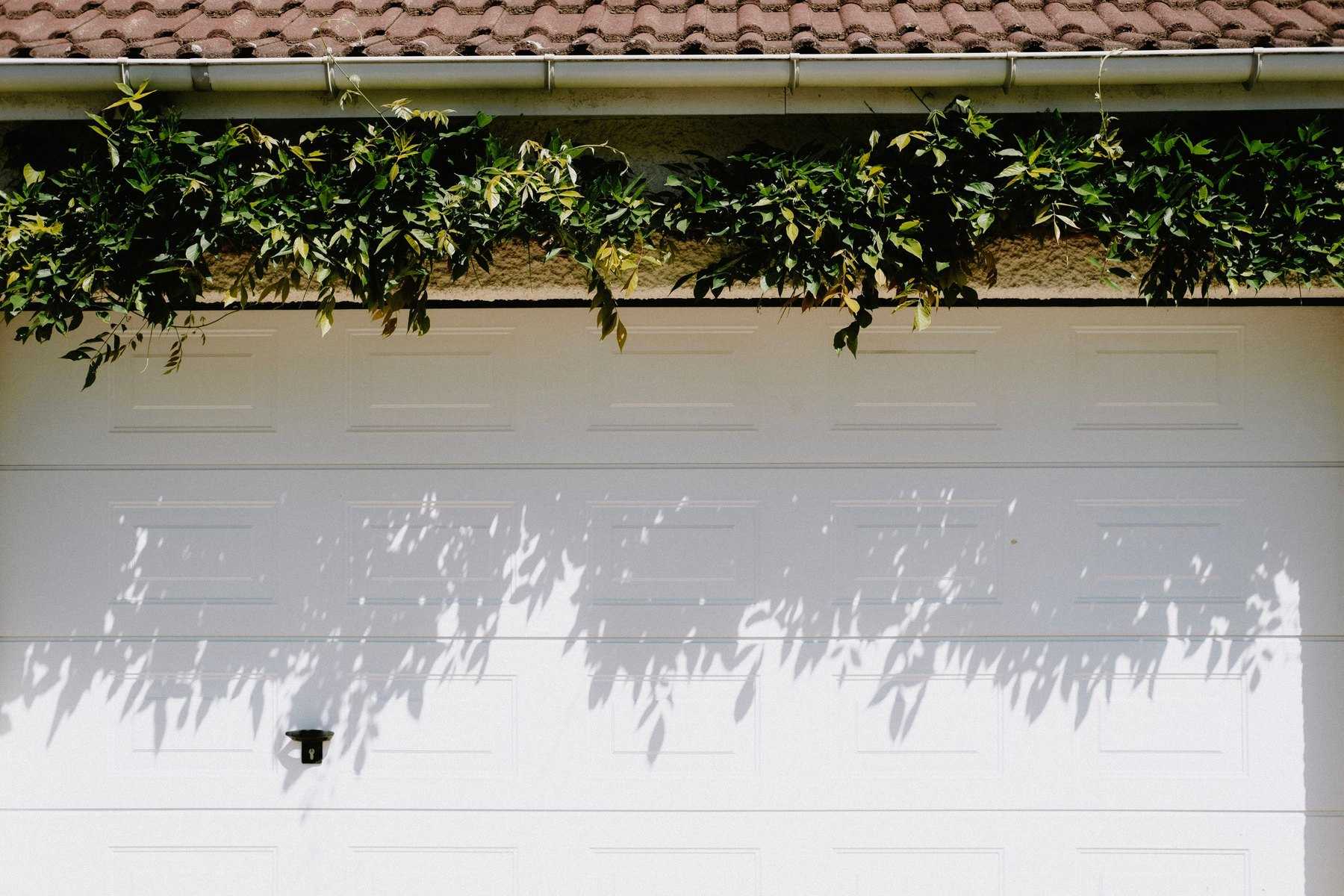
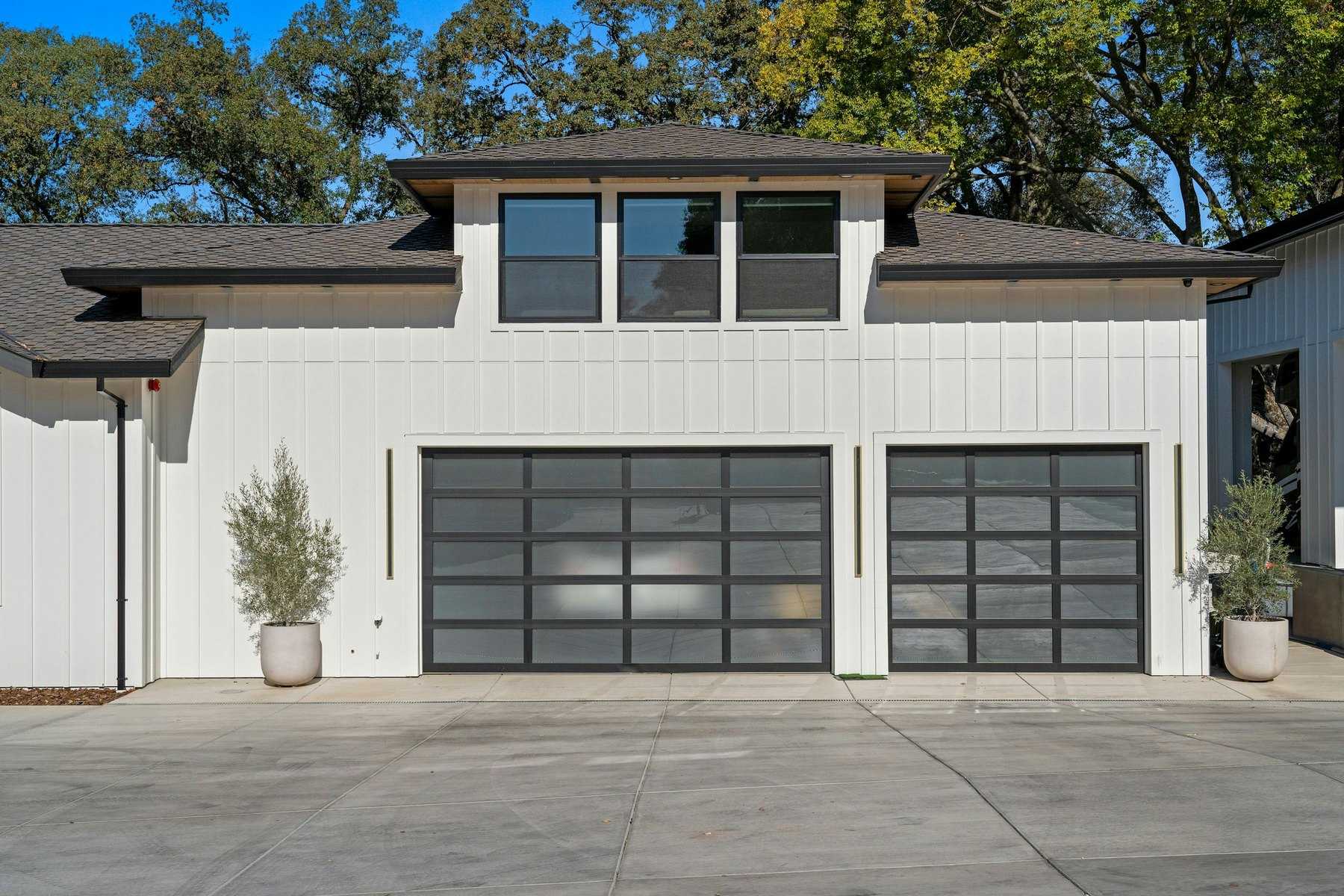

Check your HOA's guidelines before choosing a style.
| Material | Good to know |
|---|---|
| Steel | The most common choice; durable and widely available. Comes uninsulated or with one or two layers of insulation and backing. |
| Wood-look composite / fiberglass | Gives a carriage-house or wood look with less maintenance than real wood. |
| Wood | Classic appearance; needs regular finishing, especially in heat and humidity. |
| Aluminum and glass | Modern look and lots of light; check privacy and insulation. |
Steel gauge: lower numbers mean thicker steel — 24-gauge is thicker than 25 or 26. DASMA points out that gauge is only one factor in how a door performs; construction, reinforcement and insulation matter too.
Insulation and R-values
Insulated doors usually use either rigid polystyrene panels or injected polyurethane foam, which typically reaches higher R-values in the same thickness. Two cautions before you compare spec sheets:
- Not all R-values are equal. DASMA explains that a calculated R-value for the door section doesn’t account for the whole door (joints, edges, windows) and isn’t comparable to a tested whole-door U-factor. Ask for tested figures when comparing models.
- Seals matter. A well-insulated door with worn bottom and perimeter seals still lets heat and humidity in. Make sure the quote includes new weatherstripping.
Wind ratings
Fort Bend County is not part of the Texas Windstorm Insurance Association’s designated coastal catastrophe area, so the TDI windstorm certification process for coastal counties doesn’t apply in Fulshear. Wind-rated doors are still available. DASMA notes that a properly wind-rated door has both positive and negative pressure ratings and warns against adding your own bracing to a door. If storm performance matters to you, ask your installer about wind-rated models and what’s required locally.
HOA approval checklist
- Find your community’s rules. Look for the design guidelines and the modification or architectural request form on your HOA’s website or management portal.
- Get the specifics from your installer: the door model, size, color, window pattern and hardware, ideally with a spec sheet or product photo.
- Submit before you order. Note how long the review takes; custom doors can take weeks to arrive and usually can’t be returned.
- Check size rules. Some guidelines limit door height or style (Cross Creek West’s builder guidelines, for example, require committee approval above 8 feet).
- Keep the written approval with your quote and give the installer a copy.
Permits
We couldn’t confirm whether the City of Fulshear requires a permit for a straightforward garage door replacement. The City’s Development Services department handles permits through an online portal; ask your installer whether they’ll pull any required permit, and check with the City (or Fort Bend County, if you’re outside city limits) if you’re unsure. Electrical work, such as a new outlet for an opener, is licensed separately in Texas.
What a good installation quote includes
Compare quotes line by line. A complete quote should spell out:
- the exact door model, size, material, insulation and window option;
- new springs matched to the new door’s weight (springs are sized to the door, so a new door usually needs new springs), plus new cables, rollers and tracks where needed;
- removal and disposal of the old door;
- new bottom seal and perimeter weatherstripping;
- reconnecting and adjusting the opener — or replacing it, with the model named;
- a balance test, a safety-reversal test and a sensor check before the installer leaves;
- written warranties for the door, the hardware and the labor; and
- the expected delivery and installation timeline.
Installation costs
| Job | Fixr (2025)[1] | What moves the price |
|---|---|---|
| New door, door and installation (typical) | $700–$2,000 | Material, size, insulation, design |
| Single door, door and installation | $400–$1,800 | Insulated and decorative doors cost more |
| Double door, door and installation | $1,175–$4,075 | Width, height (7 vs 8 ft), windows |
| Installation labor only, single · double | $100–$300 · $375–$575 | Custom or heavy doors take longer |
Published garage door installation costs (national cost guides). National figures for budgeting, shown side by side by source. They are not Fulshear or Houston-area averages, and not prices from the independent company that receives your request, which quotes after seeing your door.
- [1] Fixr — Garage door installation cost (updated Jan. 31, 2025). Figures checked Oct 28, 2026.
Fixr’s materials-only figures give a sense of how much the choice of material moves the price (8×7 ft / 16×7 ft door, before installation): steel $450–$1,500 / $700–$3,500; aluminum $500–$2,000 / $800–$3,800; fiberglass $800–$2,000 / $1,300–$3,000; glass $900–$2,000 / $1,500–$4,500; wood $1,000–$3,500 / $2,000–$6,000. Larger, taller, insulated and carriage-style doors generally sit toward the upper end of these ranges.
Planning a new door?
We’re setting up a local garage door professional to respond to requests. Until then, these guides cover what to check, what to avoid and what to ask any garage door company.
Frequently asked questions
Do I need HOA approval to replace my garage door in Fulshear?
Often, yes. Many Fulshear-area master-planned communities have architectural or design review. Cross Creek Ranch, for example, asks residents to submit a Modification Request Form for exterior changes before work begins. Check your own HOA's guidelines and get approval in writing before you order a door, especially if you're changing style or color.
Do I need a permit to replace a garage door in Fulshear?
We couldn't confirm whether the City of Fulshear requires a permit for a like-for-like replacement. Ask your installer, and check with the City's Development Services department (permits are handled through the City's online portal). If your home is outside city limits, check with Fort Bend County.
What size is a standard garage door?
According to door manufacturer Clopay, the most common single-car doors are 8 or 9 feet wide by 7 feet tall, and the classic double door is 16 by 7 feet. 8-foot-tall doors are increasingly common, and double doors run up to 18 feet wide. Your installer should measure the opening, headroom and side room before quoting.
What R-value garage door should I get in Fulshear's heat?
Insulation helps if your garage is attached, has living space above it, or you spend time in it. Be careful comparing R-values: the door industry association DASMA notes that a calculated section R-value is not the same as a tested whole-door rating. Ask for tested door U-factors when comparing models, and remember that weatherseals matter too.
How much does a new garage door cost?
Fixr (2025) reports $700–$2,000 nationally for a typical new door, door and installation, with single doors around $400–$1,800 and double doors around $1,175–$4,075. Installation labor alone is about $100–$300 for a single door and $375–$575 for a double. These are budgeting figures, not Fulshear prices or quotes from the company that receives your request. Material, size, insulation, windows and design drive the price. Get itemized written quotes.
Should I replace my opener at the same time as my door?
Not automatically. A newer, well-working opener can usually stay. Replacing both at once can make sense if the opener is old, lacks safety sensors, is noisy, or doesn't match the new door's weight. Ask the installer to explain their recommendation.
Sources and further reading
- Clopay — Average garage door sizes
- Clopay — Garage door insulation
- DASMA Technical Data Sheet #163 — Garage door R-values and U-factors
- DASMA Technical Data Sheet #154 — Steel gauge in garage doors
- DASMA Technical Data Sheet #152 — Wind load and garage doors
- DASMA Technical Data Sheet #167 — Garage door safety and maintenance
- Fixr — Garage door installation cost (updated Jan. 31, 2025)
- Cross Creek Ranch Community Association — Homeowner FAQ (modification requests)
- Cross Creek West Residential Design Guidelines (rev. June 2023)
- City of Fulshear — Development Services applications and permits
- Texas Windstorm Insurance Association — Designated catastrophe area
Page last reviewed . This page is general information, not a substitute for an on-site inspection by a qualified technician. Spotted an error? Tell us.