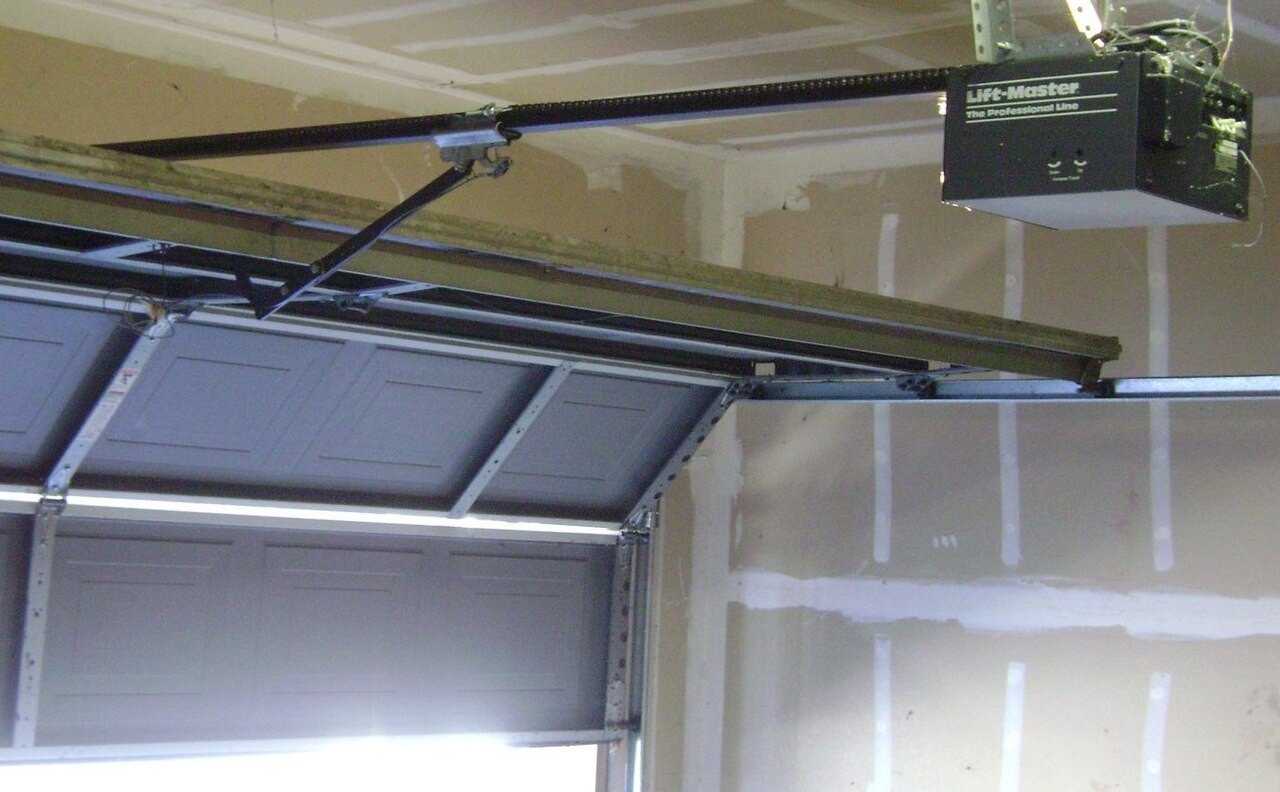
Check these first (in this order)
Work through these before booking a service call. None involve touching the springs or cables.
- Power. Is the opener plugged in and are its lights working? Check the breaker and, if the outlet is a GFCI type, press reset.
- Lock or vacation mode. If the wall button works but remotes and the keypad don’t, the wall control’s lock feature may be on. Your manual explains how to turn it off.
- Remote and keypad batteries. DASMA lists a weak or dead battery as the most common reason a remote stops working.
- Safety sensors. If the door won’t close or reverses partway, look at the two small sensors near the floor (see below).
- The emergency release. If the motor runs but the door doesn’t move, the trolley may have been disconnected. Check the springs first — a broken spring can look like the same problem.
- Obstructions and tracks. Look for anything at the threshold or in the tracks, and for rollers out of the track. If a roller is out, stop and call a technician.
Safety sensors: the most common “opener” problem
Openers made since January 1, 1993 must have external entrapment protection — usually a pair of photo-eye sensors — under federal rules (16 CFR Part 1211). If the beam between them is broken while the door closes, the opener reverses. That’s the feature doing its job, but it also means a dirty lens or a bumped bracket can stop your door from closing.
- Look at the sensor lights. Many sensors have an indicator light on each side; a light that’s off or flickering suggests misalignment or a wiring problem.
- Clear and clean. Remove anything in the beam path and wipe both lenses.
- Re-align. Gently adjust the bracket until the receiving sensor’s light is steady.
- Watch for sun. Opener maker Genie notes that direct sunlight on a sensor can cause the same symptom, which can happen at certain times of day or year.
- Keep them low. DASMA says the beam should be no higher than 6 inches above the floor, so a small child can’t crawl under it. Don’t “fix” a sensor problem by moving the sensors higher or bypassing them.
Remote, keypad and smart-control problems
- One remote fails: replace its battery first.
- All remotes fail, wall button works: check lock or vacation mode, then reprogram a remote.
- Remotes work only up close: DASMA notes that some LED bulbs, other radio devices and a weak battery can reduce range. Try a different bulb in the opener.
- Buying a new remote or keypad: compatibility depends on your opener’s radio system. LiftMaster, for example, matches remotes by the color of the “learn” button on the opener. Check before you buy.
- Smartphone control and auto-close: DASMA’s guidance says closing a door you can’t see — by app or timer — should only be done with a photo-eye-equipped opener on a sectional door, with a warning before the door moves. Ask a technician to confirm your setup.
When it’s the opener itself
If the checks above don’t solve it, the problem is inside the opener or its drive. Common repairs include worn drive gears or sprockets, a failed logic board or receiver, worn trolleys and drive belts or chains, and travel-limit or force settings that need adjustment. Limit and force settings affect safety, so have them set by someone who will re-test the reversal feature afterwards.
Drive types if you’re replacing
| Drive | Good to know |
|---|---|
| Chain drive | Usually the lowest cost; louder |
| Belt drive | Quieter; a popular choice when a bedroom is above or beside the garage |
| Screw drive | Fewer moving parts; can be sensitive to temperature swings |
| Direct drive | Quiet with few moving parts; typically costs more |
| Wall-mount (jackshaft) | Mounts beside the door and frees the ceiling; costs the most; sectional doors only |
Cost guides commonly put an opener’s life at around 10–15 years. Repair usually makes sense for a newer opener with one failed part. Replacement makes more sense for an opener that predates safety sensors, keeps failing, needs a discontinued part, or lacks features you want, such as battery backup.
Power outages, storms and the manual release
Hurricane Beryl in July 2024 knocked out power to about 2.26 million CenterPoint customers across the Houston area, including Fort Bend County. During an outage, the opener can’t move the door, so it’s worth knowing how to use the red emergency release before you need it:
- With the door closed, pull the release handle to disconnect the door from the opener.
- Lift the door by hand — only if the springs are intact and the door feels balanced.
- When power returns, reconnect the trolley as your manual describes, and run the door once to make sure it re-engages.
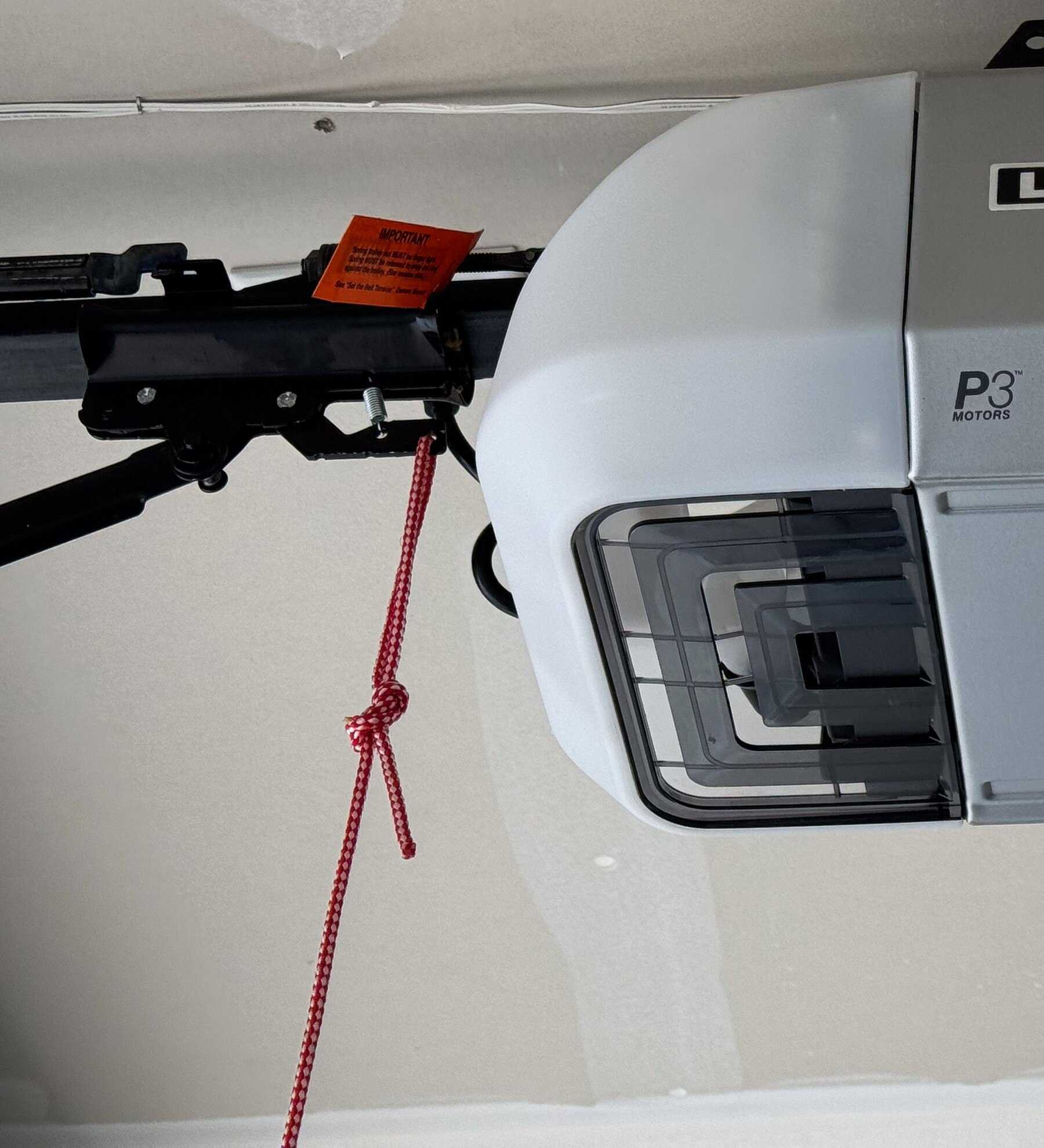
Avoid pulling the release while the door is open: if a spring is weak or broken, the door can drop quickly. Battery backup keeps an opener working through short outages. California requires it on new installations; we haven’t found an equivalent Texas requirement, so in Fulshear it’s an option to ask about rather than a given.
Opener repair and replacement costs
| Job | Fixr repair guide (2025)[1] | Fixr opener guide (2025)[2] | What moves the price |
|---|---|---|---|
| Opener repair (parts and labor) | $100–$300 | — | Part that failed, opener type |
| Safety sensor repair | $100–$150 | — | Realignment vs. new sensors |
| Circuit board replacement | $150–$400 | — | Opener brand and model |
| New opener (unit and installation) | — | $300–$600 | Drive type, horsepower, battery backup, smart features |
Published garage door opener repair and replacement costs (national cost guides). National figures for budgeting, shown side by side by source. They are not Fulshear or Houston-area averages, and not prices from the independent company that receives your request, which quotes after seeing your door.
- [1] Fixr — Garage door repair cost (updated Jan. 31, 2025). Figures checked Oct 28, 2026.
- [2] Fixr — Garage door opener installation cost (updated Jan. 31, 2025). Figures checked Oct 28, 2026.
Frequently asked questions
Why is my garage door opener light blinking and the door won't close?
On many openers a blinking light with a door that won't close (or reverses) means the safety sensors are blocked or misaligned, or sunlight is hitting a sensor. Clear the path, clean both lenses and adjust the brackets until both sensor lights are steady. Check your opener's manual — blink patterns vary by brand.
Why did my garage door remote stop working?
The most common cause is a dead remote battery. If the wall button works but no remote does, check whether the opener's lock or vacation mode is on. LED bulbs in the opener and other radio sources can also interfere with remotes, according to DASMA.
Should I repair or replace my garage door opener?
Repair is usually worth it for a newer opener with a single failed part. Replacement makes more sense if the opener predates 1993 and lacks safety sensors, if it keeps failing, if parts are no longer available, or if you want features like a quieter belt drive, battery backup or smartphone control. Cost guides commonly cite a 10–15 year lifespan.
How do I open my garage door during a power outage?
With the door closed, pull the red emergency release handle to disconnect the door from the opener, then lift the door by hand — only if the springs are working. If a spring is broken, don't lift the door. When power returns, reconnect the trolley as described in your opener manual.
Do garage door openers need battery backup in Texas?
We haven't found a Texas requirement. California requires battery backup on newly installed openers, but that law applies only in California. In the Houston area, where long outages followed Hurricane Beryl in 2024, many homeowners choose battery backup anyway.
How much does garage door opener repair cost?
Fixr (2025) lists $100–$300 to repair an existing opener and $300–$600 for a new opener, unit and installation. These are national budgeting figures, not Fulshear prices or quotes from the company that receives your request. Get the diagnosis and price in writing before work starts.
Sources and further reading
- U.S. Code of Federal Regulations, 16 CFR Part 1211 — Safety Standard for Automatic Residential Garage Door Operators
- U.S. Consumer Product Safety Commission — Garage door operator safety (Publication 523)
- DASMA Technical Data Sheet #369 — Residential garage door operator safety
- DASMA Technical Data Sheet #364 — Photoelectric sensor installation
- DASMA Technical Data Sheet #374 — Radio controls troubleshooting
- Genie — Opener FAQs (safety sensors)
- LiftMaster — Universal remote compatibility (learn-button colours)
- International Door Association — Garage door care and maintenance
- Fixr — Garage door repair cost (updated Jan. 31, 2025)
- Fixr — Garage door opener installation cost (updated Jan. 31, 2025)
- The Texas Tribune — Hurricane Beryl damage and outages (July 8, 2024)
- Texas Occupations Code §1305.151 — Electrical license required
- Texas Department of Licensing and Regulation — License search
Page last reviewed . This page is general information, not a substitute for an on-site inspection by a qualified technician. Spotted an error? Tell us.